

Understanding the financial landscape of Western Australia is vital for any developer. The market in 2026 reflects a unique blend of high demand and resource competition. Investors must navigate shifting economic pressures that define the commercial construction cost Perth today. This guide provides a comprehensive breakdown of what to expect when building in the metropolitan area.
Perth has historically maintained a distinct pricing structure compared to Sydney or Melbourne. Isolation from other major cities creates specific logistical challenges for material delivery. Furthermore, the local workforce is often shared with the booming mining sector. This dynamic significantly influences the baseline prices for all commercial structures.
The current year, 2026, has seen a stabilization in some material supply chains. However, specialized trades still command premium rates due to ongoing infrastructure projects. Accurate budgeting requires a deep dive into sector-specific data and regional variables. Success in the Perth market depends on recognizing these nuances before breaking ground.
How Much Does Commercial Construction Cost in Perth per Square Metre?
The standard metric for estimating any project is the rate per square metre. These figures provide a high-level view of the necessary investment for different building types. In 2026, the commercial construction cost Perth typically starts at $1,900 for basic structures. High-end developments in the CBD can easily exceed $6,000 per square metre.
Office developments are currently seeing a surge in demand for sustainable features. Premium Grade A offices in the city center require advanced climate control and smart systems. These additions drive the price toward the higher end of the scale. Conversely, suburban warehouse spaces remain the most affordable entry point for new developers.
The following table summarizes the expected price ranges for various commercial sectors in Perth for 2026. These figures represent the construction contract value and exclude land costs.
| Building Category | Low Range (per m²) | High Range (per m²) |
| Industrial Warehouse | $1,200 | $2,100 |
| Retail (Standard Shell) | $2,000 | $3,200 |
| Suburban Office (Low-rise) | $2,400 | $3,800 |
| CBD Office (High-rise) | $3,900 | $6,200 |
| Medical and Specialized Care | $4,100 | $6,500 |
Industrial facilities remain the backbone of the outer metropolitan growth corridors. Large-scale logistics hubs benefit from simpler designs and faster assembly times. However, if your facility requires heavy-duty flooring for machinery, expect costs to rise. Modern warehouses in 2026 also integrate solar arrays as a standard requirement.
Understanding Office Fit-out Variations
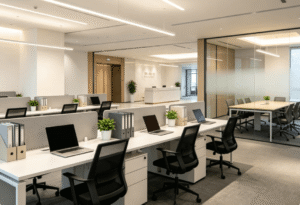
Office costs vary significantly based on the level of interior completion. A “warm shell” provides basic services but requires the tenant to finish the space. Fully integrated fit-outs include everything from workstations to bespoke acoustic partitioning. The cost for a high-quality office fit-out in Perth averages $1,400 per square metre.
Retail and Hospitality Expenses
Retail spaces in 2026 often require complex structural modifications for ventilation. Restaurants and cafes face even higher costs due to grease traps and commercial kitchens. These technical requirements add a layer of complexity to the commercial construction cost Perth. Developers should allow for a higher contingency when building hospitality-focused assets.
Primary Drivers of Commercial Construction Cost Perth
Several key factors contribute to the total expenditure of a project in Western Australia. Labor is currently the most significant variable in the 2026 construction market. Skilled trades like electricians and plumbers are in high demand across the state. This competition often forces builders to offer higher wages to secure reliable crews.
Material costs also play a crucial role in shaping the final budget. While steel prices have leveled off, concrete and timber remain subject to local supply constraints. Shipping these materials to Western Australia adds a “geographic premium” to the price. Transport and logistics can account for up to 7% of total material expenses in Perth.
Environmental regulations have become stricter as we progress through 2026. All new commercial buildings must meet high energy efficiency standards under the National Construction Code. These mandates require better insulation, high-performance glass, and efficient HVAC systems. While these features increase the initial spend, they offer long-term savings on utility bills.
Impact of Soil and Site Conditions
Perth is known for its sandy coastal plains, which generally favor foundation work. However, sites near the river or in the foothills present different challenges. Limestone outcrops can require expensive rock breaking and specialized excavation equipment. Unforeseen ground conditions remain a leading cause of budget overruns in WA.
The Influence of the Mining Sector
The strength of the resources industry directly affects metropolitan construction prices. When mining activity peaks, labor and equipment are diverted to the north-west. This creates a shortage in the Perth metro area, driving up hourly rates. Smart developers timing their projects during resource lulls can often find better value.
Financing and Insurance Costs
Interest rates and insurance premiums have seen shifts leading into 2026. Lenders now require more detailed feasibility studies before approving commercial loans. Insurance for large-scale sites has also increased due to global climate risk assessments. These “soft costs” must be factored into the commercial construction cost Perth calculations.
Navigating Local Regulations and Site Conditions
Every project in Perth must pass through a rigorous local government approval process. Development Application (DA) fees are calculated based on the total project value. Furthermore, different councils have varying requirements for aesthetic design and public art. These local mandates can add several thousand dollars to the pre-construction budget.
Utility connections are another area where costs can accumulate rapidly. Connecting to the Western Power grid often requires transformer upgrades for large buildings. Water Corporation charges for headworks are also a fixed expense that developers must anticipate. Headworks and utility connection fees typically range from $20,000 to over $100,000.
Compliance with the Disability Discrimination Act (DDA) is mandatory for all commercial spaces. This includes providing ramps, elevators, and accessible bathroom facilities. In 2026, these requirements are strictly enforced from the earliest design stages. Failing to plan for accessibility can lead to costly retrofits during the final inspection.
Heritage and Environmental Surveys
If your site is located in an older suburb like Fremantle or West Perth, heritage issues may arise. Preserving facade elements or conducting archaeological surveys adds time and money. Similarly, environmental assessments for contaminated land are common in industrial zones. These surveys ensure the site is safe for future occupants but require upfront investment.
Fire Safety and Bushfire Attack Levels
Parts of the Perth hills and outer suburbs are classified as bushfire-prone areas. Buildings in these zones must adhere to specific Bushfire Attack Level (BAL) ratings. This may involve installing fire shutters or using non-combustible external cladding. These safety measures are essential for protecting the asset but increase the commercial construction cost Perth.
Traffic Management and Site Access
Constructing in the Perth CBD requires detailed traffic management plans. Closing lanes or moving heavy machinery during peak hours involves significant council fees. Site access in dense urban areas is often restricted, slowing down the delivery of materials. Efficient logistics planning is the only way to mitigate these urban construction premiums.
Evaluating Project Feasibility and Partner Selection
Choosing the right partner is the most critical step in managing your budget. A professional builder should provide a transparent breakdown of all anticipated expenses. They must have a proven track record of delivering projects within the Western Australian regulatory framework. A builder’s ability to manage subcontractors determines the ultimate commercial construction cost Perth.
When evaluating a building partner, consider their experience with “Value Engineering.” This process involves finding more affordable ways to achieve the same design intent. For example, substituting a specific facade material for a local equivalent can save thousands. A builder who understands the local supply chain is an invaluable asset during the design phase.
You should also look for a partner who utilizes modern project management software. This technology allows for real-time tracking of costs and project milestones. In 2026, data-driven decision-making is the standard for successful commercial developments. Ensuring your builder is financially stable protects your investment from potential insolvency risks in the industry.
Identifying the “best fit” for your project depends on your specific goals and risk tolerance. If you prioritize speed, a builder with an in-house team might be preferable. For complex designs, a specialist contractor with architectural expertise is necessary. Always conduct thorough due diligence and visit previous project sites before signing any contracts.
Summary
The commercial construction cost Perth in 2026 is defined by sector-specific rates and regional labor demands. While industrial projects remain affordable, CBD offices require significant capital for tech and sustainability. By accounting for hidden regulatory fees and choosing an experienced local builder, developers can manage risks. Perth continues to offer strong growth opportunities for those who plan with precision.
FAQ
1. What is the most expensive part of a commercial build in Perth?
Labor and specialized mechanical services typically represent the largest portion of the budget. In 2026, the cost of skilled trades has risen due to competition with infrastructure and mining projects. High-performance HVAC systems and elevators also add significant fixed costs to multi-story developments.
2. Can I reduce the commercial construction cost Perth by using modular methods?
Modular construction can offer savings of 10% to 15% on labor and time-related expenses. By building sections in a controlled factory environment, you reduce the risk of weather delays on-site. This method is becoming increasingly popular in Perth for hotels and student accommodation blocks.
3. How much contingency should I add to my Perth building budget?
A contingency of at least 10% to 15% is recommended for all commercial projects in 2026. This buffer covers unexpected ground conditions, price hikes in raw materials, or design changes. Having a solid financial cushion prevents project stalls and ensures the building reaches completion.
4. Do Perth councils charge extra fees for commercial developments?
Yes, most local government areas require developer contributions for infrastructure and public amenities. These fees vary between councils like the City of Perth and the City of Stirling. It is essential to confirm these charges during the early feasibility stage of your project.
5. How does the 2026 energy code impact building prices?
The updated energy codes require better thermal performance, which increases the cost of windows and insulation. However, these investments lead to a significant reduction in operational energy bills over the building’s life. Most modern tenants in Perth now specifically seek out buildings with high energy ratings.
Reference Sources
Master Builders Western Australia