

The modern Perth office is no longer just a place to house desks; it is a strategic asset designed to solve the challenges of the hybrid work era. In a city where the “outdoor-indoor” lifestyle is a core part of the culture, Western Australian businesses are increasingly moving away from generic layouts toward high-performance environments that prioritize employee wellness and functional efficiency.
Successful office fit out Perth projects now focus on “experience-driven” design. This shift acknowledges that to bring teams back to the CBD or suburban hubs like West Perth and Subiaco, the physical workspace must offer more comfort and utility than a home office. This involves a deep dive into spatial ergonomics, thermal comfort, and acoustic integrity.
Understanding the Agile Framework for Perth Workspaces
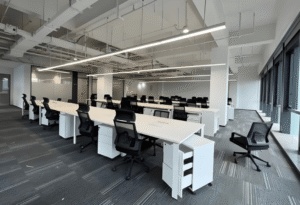
The primary trend in Western Australia’s commercial sector is the transition to “Agile” or “Activity-Based Working” (ABW). Unlike traditional fixed-seating plans, an agile fit out provides diverse settings tailored to specific tasks throughout the day.
When planning an agile layout, consider these functional zones:
Deep Work Zones: Shielded areas with high-performance acoustic treatment (targeting an NRC of 0.7 or higher) to minimize distractions.
Collaborative Huddle Spaces: Semi-open areas equipped with integrated AV technology for seamless hybrid meetings.
The “Town Hall” Hub: A central social zone, often integrated with a high-end kitchen, designed to foster spontaneous interaction—a key driver of innovation in B2B and technical sectors.
By diversifying the floor plan, businesses can optimize their square meterage, often reducing the total footprint required while increasing the perceived space and utility for staff.
Optimizing for the Perth Climate and Light
Perth’s unique environmental factors—specifically its high UV index and intense summer heat—significantly impact office design. A sophisticated office fit out Perth strategy must address “solar heat gain” and glare, which can render perimeter workstations unusable during peak afternoon hours in buildings with western exposure.
Strategic Lighting and Glazing
Daylight Harvesting: Utilizing sensors that dim internal LED lights when natural light is sufficient. This reduces energy consumption and maintains a consistent Lux level (usually 320-500 Lux for general office work).
Automated Shading: Incorporating internal automated blinds or external solar shading to manage thermal loads without sacrificing the views of the Swan River or Kings Park.
Biophilic Integration: Beyond just “adding plants,” true biophilic design incorporates natural textures (like WA timber) and water features to create a cooling psychological effect, essential for high-stress corporate environments.
Technical Performance: Acoustics and HVAC Integration
One of the most common failures in office fit outs is neglecting the technical infrastructure behind the aesthetics. In the engineering and mining-heavy landscape of Perth, technical precision in the office environment is as important as it is on-site.
| Feature | Technical Requirement | Strategic Benefit |
| Acoustics | NRC (Noise Reduction Coefficient) > 0.75 | Reduces cognitive load and fatigue in open-plan areas. |
| Air Quality | MERV 13 filtration or higher | Minimizes airborne pollutants and enhances cognitive function. |
| Power Density | Under-floor or ceiling-drop cable management | Allows for rapid reconfiguration of desks as teams grow. |
Acoustic Management
As open-plan layouts remain popular, the use of acoustic “clouds,” baffles, and wall panels is non-negotiable. For Perth businesses operating in the legal or financial sectors, ensuring “Speech Privacy” in meeting rooms requires specialized glass partitioning with high Rw (Weighted Sound Reduction Index) ratings.

Local Compliance and Standards (NCC & BCA)
Any commercial interior transformation in Western Australia must adhere to the National Construction Code (NCC) and the Building Code of Australia (BCA). This is where professional expertise separates a “cosmetic refresh” from a “compliant fit out.”
Key considerations include:
DDA Compliance: Ensuring the office is accessible to all, including doorway widths, ramp gradients, and accessible bathroom facilities.
Fire Safety: Re-engineering sprinkler head placement and smoke detector coverage whenever walls or partitions are moved.
Emergency Egress: Maintaining clear paths of travel to exits, which must be factored into the initial furniture and partition layout.
Material Selection for Longevity and Sustainability
The Perth market is increasingly leaning toward sustainable, locally sourced materials. This not only reduces the carbon footprint associated with shipping from the East Coast or overseas but also supports the local economy.
For high-traffic areas like lobbies and breakout zones, specify materials with high durability ratings. Low-VOC (Volatile Organic Compound) paints and adhesives are now industry standard to ensure healthy indoor air quality from day one. Using modular carpet tiles rather than broadloom carpet allows for “spot replacement” in high-wear areas, extending the lifecycle of the fit out by several years.
The Impact of Technology Integration
A modern office is an extension of a company’s digital stack. “Smart Office” features are no longer luxury additions but essential tools for operational efficiency.
Occupancy Sensors: Data-driven insights into which areas of the office are underutilized, allowing for future space optimization.
Contactless Entry: Using smartphone-based credentials for building and lift access, enhancing security and hygiene.
Integrated AV: Specifically, “one-touch” join capabilities in boardrooms to eliminate the technical friction often associated with starting hybrid meetings.
FAQ
What is the average timeline for an office fit out in Perth?
A standard office fit out typically takes between 8 to 14 weeks. This includes the design and documentation phase (4–6 weeks) and the physical construction phase (4–8 weeks), depending on the size of the floor plate and the complexity of the mechanical services.
Do I need a building permit for an internal office fit out?
In most cases, yes. If you are altering the internal walls, fire safety systems, or egress paths, a Building Permit is required from the local council (such as the City of Perth or City of Stirling) or a private building surveyor.
How much does an office fit out Perth cost per square meter?
Costs vary significantly based on the “spec” of the finish. A basic “refresh” may start from $800 per sqm, while a high-end, bespoke corporate headquarters with custom joinery and structural changes can exceed $2,500 per sqm.
What is the difference between a “Category A” and “Category B” fit out?
Category A (Cat A) is generally the landlord’s responsibility and includes the basic finish of the space (mechanical services, toilets, basic flooring). Category B (Cat B) is the tenant’s specific fit out, including partitions, kitchens, branding, and furniture.
Reference Sources
Green Building Council of Australia (GBCA): Guidelines on sustainable commercial fit outs and Green Star ratings.
Australian Building Codes Board (ABCB): Access to the National Construction Code (NCC) for compliance standards.
Standards Australia: AS 1428.1 (Design for access and mobility) and AS 1668.2 (Mechanical ventilation in buildings).
Safe Work Australia: Guidance on office ergonomics and psychological health in the workplace.