

The landscape of professional workspaces in Western Australia is undergoing a significant transformation. As Perth solidifies its position as a global hub for the resources, energy, and burgeoning tech sectors, the “standard office” is being replaced by high-performance environments. A modern commercial fit out in Perth is no longer just about aesthetics; it is a strategic investment in employee retention, operational efficiency, and brand identity.
For business owners, facility managers, and developers in the Perth CBD and surrounding business hubs like Subiaco or Osborne Park, understanding these shifts is critical. Navigating the intersection of local building codes, sustainable practices, and the post-pandemic hybrid reality requires more than a decorative eye—it requires a technical understanding of how space facilitates commercial outcomes.
The Shift to “Magnetic” Hybrid Hubs
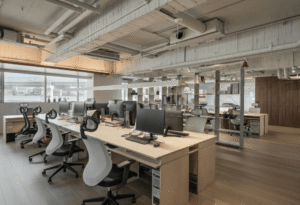
The most significant trend in Perth’s commercial sector is the move away from high-density workstations toward “Activity-Based Working” (ABW). Since the shift to hybrid models, the office must offer something the home cannot: high-tier collaboration and specialized infrastructure.
In modern Western Australian projects, we are seeing a 30-40% reduction in dedicated “assigned desks” in favor of:
Collaboration Zones: Unstructured spaces with integrated power and modular furniture for rapid team huddles.
Focus Pods: High-acoustic-rated enclosures that allow for deep work or private video conferencing, mitigating the noise issues of open-plan layouts.
Social Anchors: Expansive kitchen and “town hall” areas that function as the social heart of the company, often designed to rival high-end hospitality venues.
This “magnetic” approach ensures that when employees are in the office, their time is maximized for high-value interaction, justifying the commute to the CBD.
Biophilic Design Tailored to the WA Climate
Perth’s unique geography and intense natural light play a pivotal role in modern fit-out strategies. Biophilic design—integrating nature into the built environment—has moved from a luxury “add-on” to a core requirement for commercial wellness.
In a professional commercial fit out, Perth designers are prioritizing:
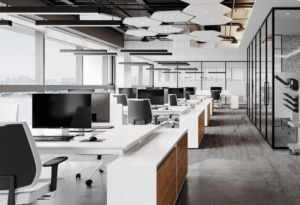
Maximum Daylight Harvesting: Utilizing glass partitioning and strategic floor planning to ensure natural light penetrates deep into the floor plate, reducing reliance on artificial lighting and lowering energy costs.
Native Internal Landscaping: Moving beyond the “potted plant” to integrated green walls and planters using Western Australian flora, which often requires less maintenance and resonates with local identity.
Natural Material Palettes: The use of ethically sourced timbers, stone, and raw textures that reflect the WA landscape, creating a calming, high-end sensory experience that reduces workplace stress.
Smart Infrastructure and Technical Integration
A modern office is only as effective as its digital backbone. In Perth’s engineering and mining-heavy commercial landscape, the integration of advanced AV and smart building technology is non-negotiable.
Key technical inclusions now include:
Universal Plug-and-Play: Meeting rooms equipped with “one-cable” solutions that work seamlessly across Teams, Zoom, and Webex, regardless of the user’s hardware.
IoT Occupancy Sensors: Real-time data collection on how spaces are used. This allows facilities managers to optimize cleaning schedules and future-proof their next lease or expansion based on actual usage patterns.
Acoustic Engineering: With the rise of video calls, standard plasterboard walls are often insufficient. High-performance fit outs now utilize double-glazed partitions (often rated to Rw 45 or higher) and specialized ceiling baffles to manage sound reverberation.
Sustainability, ESG, and NABERS Ratings
For Tier 1 and Tier 2 commercial tenants in Perth, Environmental, Social, and Governance (ESG) targets are driving design decisions. A fit out is no longer viewed in isolation from the building’s overall performance.
When planning a project, consider the following compliance and sustainability markers:
NABERS Energy for Offices: Aligning the internal fit out with the building’s star rating through LED lighting with motion sensors and high-efficiency HVAC zoning.
Circular Economy Procurement: Selecting furniture and finishes with low VOC (Volatile Organic Compounds) and high recycled content. Many Perth firms now insist on “Take-Back” schemes where manufacturers reclaim furniture at the end of its lifecycle.
Carbon Neutral Fit Outs: Calculating the embodied carbon of materials—from the steel in the partitions to the nylon in the carpet tiles—to offset the project’s environmental footprint.
Navigating the Commercial Fit Out Process in Perth
Selecting a partner for a commercial fit out in Perth requires a balance of creative vision and logistical capability. The Western Australian market has specific supply chain nuances and regulatory requirements (such as the Building Confidence Report and NCC 2022 updates) that must be managed.
Procurement and Lead Times
Post-pandemic supply chains have stabilized, but “long-lead” items—such as specialized acoustic glass, high-end European lighting, or custom joinery—can still take 12–16 weeks. Early engagement with a project manager ensures that the “Critical Path” of the construction schedule is not compromised.
Budgetary Drivers
The cost per square meter for a Perth fit out varies significantly based on the “Base Building” condition:
Warm Shell: Existing ceilings, lights, and AC are in place. Lower upfront cost but less design flexibility.
Cold Shell/Spec Fit Out: A blank canvas requiring full mechanical and electrical distribution. Higher cost but allows for total brand integration and optimized workflow.
| Feature | Impact on ROI | Typical Requirement |
| Acoustics | High (Productivity) | Minimum 40dB rating for meeting rooms |
| Lighting | Medium (Wellbeing) | 400-500 lux for workstations; 3000K-4000K color temp |
| Ergonomics | High (Health & Safety) | Electric sit-to-stand desks (standard in modern WA offices) |
| Technology | Critical (Operations) | Integrated AV with wireless screen sharing |
FAQ
Q: Do I need a building permit for a minor office refresh in Perth?
A: Generally, yes. Any works that alter the internal walls, fire safety systems (sprinklers/smoke detectors), or emergency exits require a Building Permit from the relevant local government (e.g., City of Perth or City of Stirling) and a Certificate of Design Compliance (CDC).
Q: How long does a typical commercial fit out take in Perth?
A: For a standard 500sqm office, the timeline is usually split into 4–6 weeks for design and approvals, followed by 8–10 weeks of on-site construction. Complex mechanical or structural changes will extend this.
Q: What is the average cost of a commercial fit out in Perth?
A: Costs vary by the “Grade” of finish. A “Standard” commercial fit out usually ranges from $1,200 to $1,800 per sqm, while “Premium” or “Executive” levels can exceed $2,500+ per sqm, depending on custom joinery and technology requirements.
Q: How can I ensure my office design is future-proof?
A: Prioritize modularity. Use demountable partitions instead of fixed stud walls and ensure your data cabling (Cat6A or fiber) has excess capacity for future hardware upgrades.
Reference Sources
Property Council of Australia (WA): For insights into Perth’s office market occupancy and commercial trends.
Green Building Council of Australia (GBCA): For Green Star and sustainable fit-out standards.
NABERS (National Australian Built Environment Rating System): Guidelines for measuring office energy efficiency.
WorkSafe WA: For ergonomic and safety regulations regarding office environments in Western Australia.
Australian Building Codes Board (ABCB): For information on the National Construction Code (NCC) compliance.